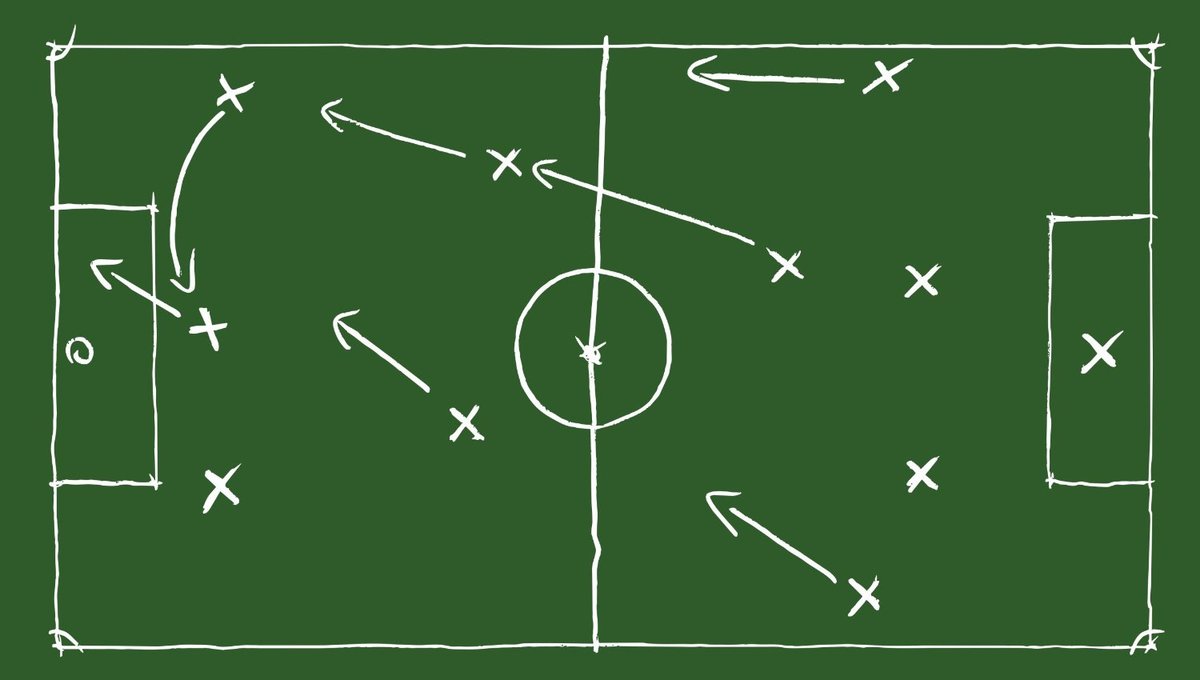
Forget mere replays. Unlocking the true narrative of football isn't just about watching the game unfold; it's about understanding its roots, tracing its evolution, and dissecting the battles of yesteryear with modern precision. This is the power of Historical Match Analysis, a deep dive into football’s past that offers far more than nostalgia – it provides invaluable strategic insights for today’s managers, players, and ardent fans.
In an era saturated with live data and instant statistics, the temptation is to focus solely on the present. But the most insightful minds in football know that to truly master the game, you must first understand where it came from. From the rigid formations of early football to the fluid, data-driven tactics of today, every pass, every goal, every victory, and every defeat leaves a fingerprint on the sport’s DNA. Analyzing these historical imprints helps us appreciate the monumental shifts, the recurring patterns, and the timeless principles that govern the beautiful game.
At a Glance: Decoding Football's Past
- More Than Nostalgia: Historical analysis isn't just for reminiscing; it’s a powerful tool for modern strategic planning and understanding football's evolution.
- Tactics Transform: Witness the journey from rigid formations like the 2-3-5 and WM to dynamic systems like Total Football, Tiki-taka, and Gegenpressing.
- Two Sides of the Coin: Utilize both qualitative insights (match reports, interviews) and quantitative data (goals, xG, tracking) for a complete picture.
- Tech is Your Ally: Leverage video analysis software, data platforms, and even machine learning to uncover hidden patterns.
- Mind the Gap: Be aware of challenges like limited historical data, rule changes, and evolving player conditioning when comparing eras.
- Broad Applications: Coaches, players, governing bodies, media, and fans all benefit from the rich context provided by historical analysis.
Why Digging Into the Past Matters: Unearthing Football's DNA
Think of football as a complex organism. To understand its current behavior and predict future actions, you need to study its genetic code – its history. Historical match analysis provides that blueprint. It allows us to track the evolution of tactics, identify the genesis of revolutionary playing styles, and understand how player roles and physical demands have transformed over time.
For coaches, it's a strategic goldmine. Learning how past champions overcame specific challenges or exploited tactical weaknesses can directly inform current game plans. For players, it offers a benchmark of performance, a lesson in adaptation, and inspiration from legends. For fans, it deepens appreciation, fuels informed discussions, and enriches the viewing experience by providing context to every modern development. Ultimately, understanding football's past isn't just an academic exercise; it's a vital component of engaging with, and succeeding in, its present and future.
The Evolution of Football: A Tactical Timeline
Football, as we know it, didn’t spring into existence fully formed. It’s a sport forged through constant innovation, tactical ingenuity, and the courage to challenge conventions. Historical match analysis allows us to trace these transformative shifts.
Early Football (Pre-1950s): The Raw Attackers and Defensive Pioneers
Before the mid-20th century, football was a different beast. Formations were often top-heavy, favoring attack, with less emphasis on midfield control or organized defense.
- The 2-3-5 Formation: This was a prevalent early system, characterized by a heavy forward line. It was designed for direct, attacking play, but often left defenses vulnerable. Goals were abundant, and matches could be chaotic spectacles.
- The WM Formation: Pioneered by Herbert Chapman’s Arsenal in the 1920s, the WM (or 3-2-5, often depicted as a "W" for attackers and an "M" for midfielders/defenders) was a crucial step towards balance. It introduced a central defender to counter the opposing center-forward, providing more defensive solidity while maintaining offensive threat. This marked a significant tactical maturation.
Mid-Century Masters: Crafting Balance and Specialization
As the sport progressed, the focus shifted towards achieving a better equilibrium between defense and attack, often with specialized roles emerging.
- Italy's Metodo (1930s): This system, instrumental in Italy's 1934 and 1938 World Cup victories, emphasized a structured defense and swift counter-attacks. It was an early example of a national team mastering a cohesive, disciplined approach.
- Hungary's "Golden Team" (1950s): Under Gusztáv Sebes, Hungary unveiled a revolutionary fluid system. Their famous 4-2-4 formation, featuring a deep-lying centre-forward (Ferenc Puskás), shattered traditional positional play. This tactical masterpiece, showcased famously against England in 1953, forced opponents to rethink their entire defensive setup.
- Catenaccio (1960s): Helenio Herrera’s Inter Milan perfected Catenaccio ("door-bolt"), an ultra-defensive system that utilized a libero (sweeper) behind the main defensive line. While often criticized for its negativity, it was incredibly effective, bringing Inter immense success and influencing defensive strategies for decades.
The Modern Era: Fluidity, Pressing, and Data
The latter half of the 20th century and the turn of the millennium saw a continuous drive towards more dynamic, adaptable, and physically demanding football.
- Total Football (1970s): Rinus Michels and Johan Cruyff's Ajax and Netherlands teams introduced "Total Football," a philosophy where any outfield player could take over the role of another in the team. It relied on positional interchange, aggressive pressing, and supreme technical ability, profoundly influencing attacking football.
- Widespread Formations: The 4-4-2 became a global standard, offering a solid structure. As football evolved, variations like the 4-3-3 and 4-2-3-1 gained prominence, allowing for greater control in midfield and more flexible attacking combinations.
- Tiki-taka (2000s): Pep Guardiola's Barcelona revolutionized possession-based football with Tiki-taka. Characterized by short, quick passes, constant movement, and extreme ball control, it aimed to dominate possession and wear down opponents, creating openings through intricate interplay.
- Gegenpressing (2010s): Jürgen Klopp's Borussia Dortmund and Liverpool sides popularized Gegenpressing – an immediate and intense counter-press after losing possession. The goal is to win the ball back high up the pitch, close to the opponent's goal, creating opportunities for fast attacks against a disorganized defense.
- Hybrid Systems and Data Analytics: Modern managers frequently employ 3-4-3, 3-5-2, and increasingly, hybrid systems that adapt in-game based on the opponent or match situation. Crucially, these tactical decisions are now heavily influenced by advanced data analytics, moving beyond intuition to data-informed strategy.
How to Conduct Historical Match Analysis: Your Toolkit
Whether you're a budding analyst, a seasoned coach, or a curious fan, a systematic approach is key to extracting meaningful insights from past games. Combining different methodologies provides the most comprehensive understanding.
Qualitative Deep Dive: The Art of Context
Qualitative analysis helps you grasp the "why" behind the "what." It provides the rich narrative, the emotional texture, and the contextual understanding that numbers alone cannot capture.
- Match Reports and Commentaries: Contemporary news reports, newspaper archives, and radio/television commentaries offer immediate reactions, perceived turning points, and tactical observations from the time. They capture the mood and general understanding of a match.
- Player and Coach Interviews: Recollections from those directly involved offer invaluable first-hand accounts of tactics, locker-room dynamics, and individual performances. While potentially subjective due to memory, they provide unique perspectives.
- Video Analysis (When Available): For matches with recorded footage, video is the ultimate qualitative tool. You can pause, rewind, and slow down moments to dissect formations, player movements, defensive organization, and offensive patterns. Software like Nacsport facilitates this detailed breakdown.
- Content Analysis: Examining broader trends in football literature, coaching manuals, and academic papers from a particular era can shed light on prevailing tactical philosophies and common practices.
Quantitative Clarity: The Science of Metrics
Quantitative analysis brings objectivity, allowing you to measure performance and identify statistical patterns. This is where the numbers do the talking.
- Basic Statistics: Goals scored, possession percentages, shots on target, pass accuracy, fouls, and corners provide a fundamental overview of a match's flow and key events.
- Advanced Metrics: For more recent historical matches where data is richer, advanced metrics become incredibly powerful.
- Expected Goals (xG): Estimates the probability of a shot resulting in a goal based on factors like shot location and type. Comparing xG to actual goals scored can reveal clinical finishing or missed opportunities.
- Expected Assists (xA): Measures the likelihood of a pass becoming an assist.
- Progressive Passes/Carries: Quantify how often players move the ball significantly towards the opponent's goal.
- Event and Tracking Data: Modern data platforms like Sportmonks collect granular event data (every pass, tackle, shot) and even player tracking data (position, speed, distance covered). While largely unavailable for older matches, this data is gold for contemporary historical analysis, like comparing how teams like León vs. Atl. San Luis Matchup approach different fixtures using these insights.
- Predictive Modeling: Using historical quantitative data, machine learning algorithms can identify patterns and even attempt to predict outcomes or player performances under certain conditions, offering another layer of insight.
Tech-Driven Insights: Your Digital Edge
Technology has transformed the scale and accuracy of historical match analysis.
- Video Analysis Software: Tools like Nacsport allow analysts to tag events, create custom performance indicators, and generate reports from match footage, making the qualitative process more structured.
- Data Analytics Platforms: Platforms such as Sportmonks centralize vast amounts of football data, providing tools for filtering, visualizing, and comparing statistics across different leagues, teams, and eras.
- Machine Learning Applications: For large datasets, machine learning can identify subtle patterns that human observers might miss. This includes clustering teams by playing style, predicting player fatigue, or even simulating historical scenarios.
Unpacking Iconic Clashes: Case Studies in History
Sometimes, a single match can define an era or fundamentally alter the trajectory of football. Analyzing these iconic encounters through a historical lens reveals the immediate impact and lasting legacy of tactical innovations and individual brilliance.
The Match That Changed England: England vs. Hungary (1953)
On November 25, 1953, at Wembley, England, supposedly the inventors of the game, faced Hungary’s "Magical Magyars." The outcome was a stunning 6–3 victory for Hungary, a result that sent shockwaves through English football.
- The Tactical Revelation: Hungary deployed a revolutionary 4-2-4 formation with a deep-lying centre-forward, Nándor Hidegkuti, who repeatedly pulled English defenders out of position, creating space for others. This fluid, position-interchanging system was unlike anything England had ever encountered.
- Dominant Performance: Hungary recorded a staggering 35 shots to England’s mere 5, demonstrating their tactical superiority and offensive prowess.
- Lasting Impact: The defeat forced English football into a painful but necessary re-evaluation of its traditional, rigid approach. It underscored the importance of tactical flexibility and professional fitness, paving the way for future innovations.
The Night of Seville: West Germany vs. France (1982)
The 1982 World Cup semi-final between West Germany and France on July 8, 1982, is etched in history as one of the most dramatic and controversial matches ever played.
- Dramatic Swings: The game was a rollercoaster, ending 3–3 after extra time. France initially took a 3-1 lead in extra time, only for West Germany to stage a remarkable comeback, scoring two quick goals to level the score.
- The Schumacher Foul: The match is perhaps most remembered for the infamous collision between West German goalkeeper Harald Schumacher and French defender Patrick Battiston, which left Battiston unconscious and with severe injuries, yet Schumacher received no punishment. This incident sparked furious debate about fair play and refereeing decisions.
- Penalty Shootout Drama: West Germany ultimately triumphed 5–4 in the first-ever World Cup penalty shootout, adding another layer of drama to an already legendary encounter. The match exemplified the psychological toll and unforgiving nature of high-stakes tournament football.
A Modern Rout: Feyenoord vs. Ajax (2023–24)
While not as historically distant, the Eredivisie encounters between Feyenoord and Ajax in the 2023–24 season offer a stark contemporary example of tactical dominance and a significant historical moment for a different reason.
- Unprecedented Defeat: Feyenoord inflicted Ajax’s worst defeat in 124 years, winning 10–0 on aggregate across two matches (4–0 away, 6–0 home).
- Tactical Execution: Feyenoord’s high-pressing and fluid attacking tactics overwhelmed a struggling Ajax side, exposing their vulnerabilities and lack of cohesion. This case study demonstrates how current analytical tools can dissect such a comprehensive victory, highlighting pressing triggers, defensive structures, and attacking rotations.
- Shifting Power: This result didn’t just mark a historic defeat; it signaled a potential shift in the balance of power within Dutch football, proving that even long-standing giants can be humbled by superior tactical and player performance.
Bridging Eras: What's Changed (and What Hasn't)
Comparing matches across different footballing eras is like comparing apples and oranges, yet it’s essential for understanding the sport's evolution. While the fundamental objective remains the same – score more goals than the opponent – how teams achieve it has undergone profound transformations.
Player Fitness & Physicality: From Stamina to Science
- Pre-1980s: Footballers were athletes, but conditioning was relatively basic, often focusing on general endurance. Training regimens were less scientifically informed, and recovery methods were rudimentary.
- Modern Era: Today's athletes undergo scientifically designed, personalized programs. Periodisation, strength and conditioning, high-intensity interval training (HIIT), and advanced nutrition are standard. This has led to players covering greater distances at higher intensities, maintaining peak performance for longer periods, and significantly reducing injury risks. Comparing the raw athleticism of a 1950s player to a modern one is almost unfair due to these advancements.
Tactical Rigidity to Fluidity: The Adaptable Game
- Early Eras: Formations like the 2-3-5 and WM were often rigid, with players having fixed roles and limited positional interchange. Deviating from the system was rare.
- Contemporary Approaches: Modern football values adaptability and versatility. Players are expected to be multi-functional, capable of performing various roles. Formations are fluid, often changing multiple times within a single match based on possession, defensive phases, or specific opponent threats. Dynamic in-match adjustments by coaches are now commonplace, facilitated by real-time data and sophisticated communication.
Data’s Ascendance: From Eyeball to Algorithms
- Before the Digital Age: Analysis relied heavily on observation, basic match reports, and the subjective insights of coaches and scouts. Data was minimal, often just goals, corners, and perhaps shots.
- The Data Revolution: Modern football is drenched in data. GPS tracking measures player movement, speed, and heat maps. Video analysis systems break down every touch. Advanced metrics like xG, xA, and progressive passing are standard. Predictive modeling informs everything from scouting to injury prevention. This wealth of information allows for an unprecedented level of detailed, objective historical match analysis, offering insights that simply weren't possible in previous decades.
Navigating the Past: Challenges and Pitfalls
While historical match analysis is incredibly rewarding, it’s not without its hurdles. Researchers and analysts must be mindful of inherent challenges to ensure their comparisons and conclusions are fair and accurate.
The Ghost of Missing Data
One of the biggest obstacles is the sheer lack of comprehensive, standardized data for older matches. Trying to calculate Expected Goals (xG) for a game in the 1960s is virtually impossible because the granular event data (shot locations, defensive pressure, pass type) simply wasn't recorded. This data scarcity often limits quantitative analysis to basic statistics for pre-digital eras, forcing a greater reliance on qualitative methods.
The Shifting Sands of Rules
Football’s rulebook has evolved significantly over time, and these changes directly impact tactics and analysis.
- Offside Law: Tweaks to the offside rule (e.g., 'active' involvement, no offside from throw-ins) have influenced how teams attack and defend space.
- Substitutions: The introduction and increase in substitutions have dramatically altered game management, player fatigue, and tactical flexibility.
- VAR: The Video Assistant Referee has added a layer of scrutiny to decisions, which can affect game flow and psychological momentum, making direct comparisons with pre-VAR eras complex.
Conditioning Conundrums
As mentioned, the physical capabilities of modern athletes are vastly superior to their predecessors due to scientific training. A player covering 12km in a 1970s match would be an anomaly; today, it’s standard for midfielders. Comparing raw performance metrics like distance covered or sprint speeds across eras without acknowledging this conditioning gap can lead to skewed conclusions.
Context is King (and Queen)
Tactical philosophies are products of their time. A highly defensive Catenaccio system in the 1960s was revolutionary and effective, but simply transplanting it into modern football without significant adaptation would likely fail. Understanding the unique historical context – the prevailing ideas, the quality of pitches, the types of balls used, and even cultural influences – is crucial for accurately interpreting past tactics.
Battling Nostalgia Bias
As humans, we often idealize the past. Rose-tinted glasses can lead to an over-romanticization of historical performances, making objective analysis difficult. A legendary team might be remembered for its brilliance, but a rigorous analysis might reveal tactical flaws or inefficiencies that were simply less exposed by the opposition of the time. Consciously striving for objectivity is vital.
Beyond the Pitch: Who Benefits from Historical Insights?
The applications of historical match analysis extend far beyond academic curiosity. It’s a practical tool that serves various stakeholders within the football ecosystem.
For Coaches and Strategists
- Tactical Evolution: Studying how tactics have developed provides a historical playbook of successful (and unsuccessful) strategies.
- Opponent Analysis: Understanding an opponent’s historical tendencies, especially against similar tactical setups, can inform current match preparation.
- Training Enhancements: Insights into past physical demands and player attributes can guide modern training regimes and player development pathways.
- Problem-Solving: Examining how past teams overcame specific challenges (e.g., breaking down a deep block, recovering from a goal down) can offer solutions for current dilemmas.
For Player Development & Scouting
- Skill Evolution: Tracking how specific skills (e.g., passing range, dribbling techniques, defensive positioning) have evolved can inform development programs for young players.
- Benchmarking Performance: While acknowledging era differences, historical data can provide a general benchmark for evaluating player potential and current performance.
- Mentorship and Inspiration: Highlighting the achievements and challenges of past greats can motivate and guide aspiring players.
For Governing Bodies & Policy Makers
- Rule Changes: Analyzing how past rule changes impacted game flow and player safety can inform future modifications.
- Tournament Formats: Historical data on tournament outcomes can help evaluate the fairness and excitement of various competition structures.
- Global Development: Understanding how football has grown in different regions historically can guide investment and development programs.
For Media, Analysts, and Engaged Fans
- Building Narratives: Historical context enriches storytelling, allowing commentators and journalists to draw parallels and highlight legacies.
- Interactive Platforms: Historical data fuels engaging content for fan platforms, from "greatest XI" debates to interactive timelines of tactical shifts.
- Enhanced Viewing Experience: A deeper understanding of the game's history allows fans to appreciate the nuances of modern play, recognizing echoes of the past and anticipating future trends. It transforms casual viewing into an informed, strategic appreciation of the sport.
Your Turn: Practical Steps for Your Own Analysis
Ready to dive in and conduct your own historical match analysis? Here’s a simplified roadmap to get you started, drawing on the practical methodologies employed by data analysts.
- Define Your Objective: What specific question are you trying to answer? Are you looking for the evolution of a particular tactical setup, comparing a team’s performance across decades, or analyzing the impact of a rule change? A clear objective will guide your data collection and analysis.
- Source Your Data (and Clean It Up):
- Qualitative: Start with readily available match reports, documentaries, and archived newspaper articles. For truly old matches, these might be your primary source.
- Quantitative: For more recent history, seek out sports data providers. For a comprehensive project, you might even compile your own dataset from various sources. Just like in a professional project analyzing historical international football, expect to handle missing values, standardize data formats, and resolve discrepancies to ensure data quality and consistency. You might end up with thousands of rows of match data, covering major tournaments and friendly matches, excluding non-full international games.
- Choose Your Tools:
- Spreadsheets: For basic organization and filtering of qualitative notes or simple quantitative data.
- Video Editing Software: If you have access to match footage, even basic software can help you clip and annotate key moments.
- Data Analysis Libraries (e.g., Pandas, Matplotlib.pyplot): For more ambitious quantitative projects involving large datasets, tools like Python's Pandas for data manipulation and Matplotlib for visualization are invaluable. These allow you to conduct exploratory data analysis, identify trends, and create compelling charts.
- Analyze and Interpret:
- Look for Patterns: Are there recurring tactical themes? Do certain teams consistently perform better under specific conditions?
- Identify Anomalies: What stands out as unusual? These often point to a unique innovation or a significant event.
- Synthesize: Combine your qualitative narratives with your quantitative findings. Do the numbers support the historical accounts, or do they offer a new perspective?
- Consider Context: Always relate your findings back to the era in which the matches were played.
Common Questions About Historical Match Analysis
Q: How far back can I reliably analyze matches using data?
A: Quantitative analysis with rich metrics (like xG or tracking data) is generally reliable from the mid-2000s onwards. For basic stats (goals, possession, shots), you can go back to the 1990s and sometimes even the 1980s, but data becomes progressively sparse and inconsistent the further back you go. For pre-1980s, qualitative analysis (reports, interviews, limited video) becomes dominant.
Q: Can historical analysis predict future match outcomes?
A: It can inform predictions by revealing long-term trends, tactical preferences, and player behaviors. However, football is dynamic; current form, squad changes, injuries, and unique match circumstances often outweigh historical patterns in short-term predictions. It provides context, not a crystal ball.
Q: How do rule changes affect historical comparisons?
A: Rule changes are a significant challenge. For instance, comparing the number of offside calls in an era with stricter offside rules to a modern game with VAR and more lenient interpretations is misleading. Analysts must explicitly acknowledge these differences and focus on comparisons that remain relevant despite the rule shifts (e.g., goal-scoring efficiency rather than precise offside counts).
Q: Is it fair to compare players from different eras?
A: Direct, head-to-head comparisons of individual players are often challenging due to vastly different physical conditioning, tactical environments, and equipment. Instead, it's more productive to compare their impact within their respective eras, their adaptability to prevailing styles, and their innovation in specific roles.
The Enduring Legacy: Why History Keeps Scoring Goals
In the end, Historical Match Analysis isn’t about living in the past. It’s about leveraging the past to illuminate the present and shape the future. By meticulously examining football’s rich history – from the ground-breaking tactics of the "Golden Team" to the data-driven strategies of today’s giants – we gain a deeper appreciation for the sport’s complexity, its relentless evolution, and the sheer genius that has defined its most memorable moments.
Whether you're a coach trying to fine-tune a strategy, a scout evaluating talent, a journalist crafting a compelling narrative, or simply a fan eager to understand the beautiful game on a profound level, the insights gleaned from historical analysis are invaluable. The echoes of past victories and defeats resonate on every modern pitch, continuously scoring goals for those who take the time to listen.